Free tool
Repair or capital improvement?
Answer a few questions about a rental cost. This runs the IRS BAR test and the three safe harbors and tells you whether it is a repair you deduct now on Schedule E line 14 or a capital improvement you depreciate over 27.5 years. The same call the Oberlin24 assistant makes.
Educational estimate, not tax advice. Real calls turn on facts this tool cannot see (whether a component is "major," how a casualty loss was handled, your books' account mapping). Keep a one-line note of your reasoning per item and confirm with your CPA.
How the tool decides
A repair keeps the property in ordinary operating condition and deducts in full the year you pay it, on Schedule E line 14. A capital improvement betters or restores the property and depreciates over 27.5 years on line 18. Everything hard lives between those two sentences, so the IRS gives a test and three safe harbors, and this tool applies them in the order that actually resolves the call.
The BAR test
The tangible property regulations say a cost is an improvement, and must be capitalized, if it is a Betterment, an Adaptation, or a Restoration:
- Betterment: fixes a defect that existed when you bought it, enlarges the property, or materially increases its capacity, quality, or efficiency.
- Adaptation: converts the property to a new or different use.
- Restoration: replaces a major component or substantial structural part, or rebuilds to like-new after it fell into disrepair.
The trap almost every summary skips: for a building you test BAR against the affected system, not the whole building. The regulations split a building into its structure plus eight systems (HVAC, plumbing, electrical, elevators, escalators, fire protection, security, gas distribution). A $6,000 HVAC compressor is minor next to a $350,000 house but is a major component of the HVAC system, so it is a restoration. "Is it big relative to the property?" is the intuitive question and the wrong one.
The three safe harbors
If a cost is a BAR improvement, a safe harbor can still make it a current deduction. This tool checks them the way our line 14 guide recommends applying them:
- Small-taxpayer safe harbor, checked first because it is all-or-nothing. If a building's unadjusted basis is $1,000,000 or less, you can elect each year to deduct all repairs, maintenance, and improvements on it, provided the year's combined total stays under the lesser of $10,000 or 2% of that basis. On a $350,000 building the cap is $7,000. Go one dollar over and the harbor is gone for that building that whole year.
- De minimis safe harbor: $2,500 per item. Elect it and anything with a per-item or per-invoice cost of $2,500 or less deducts now, even if it would otherwise be capital. It is tested per item, so a $4,300 invoice for two $2,150 appliances qualifies. Details and the election language are in our de minimis safe harbor guide.
- Routine-maintenance safe harbor: the 10-year test. Recurring work you reasonably expect to do more than once in 10 years is deductible maintenance, automatically, no election. It cannot rescue a betterment or an adaptation, and it cannot cover something you expect to do once.
A worked example
You replace all 30 windows for $9,600 and buy a $649 dishwasher, and you have already spent $2,350 on smaller repairs this year on a $350,000 building. Small-taxpayer first: the cap is the lesser of $10,000 or 2% of $350,000 = $7,000, but the year's combined spend is $12,599, over the cap, so that harbor is off the table. The windows are a restoration of a major component: capitalize $9,600 over 27.5 years, about $349 a year instead of $9,600 now. The dishwasher is under $2,500: with the de minimis election it deducts this year. Same invoice pile, three different answers, and the order you check them in is what gets it right.
Once a cost is capital, the schedule and the bill at sale are their own topic: model them with the rental depreciation calculator. For the homeowner-vs-landlord version of this question, see are home repairs tax deductible, and to file the deduction on the right line, the Schedule E categorizer points any expense at its line.
Frequently asked questions
What is the difference between a repair and a capital improvement on a rental?
A repair keeps the property in ordinary operating condition and deducts in full the year you pay it, on Schedule E line 14. A capital improvement betters or restores the property (a new roof, an addition, a whole HVAC system) and depreciates over 27.5 years on line 18. The IRS separates them with the BAR test: an amount is an improvement if it is a Betterment, an Adaptation, or a Restoration. If it is none of those, it is a repair.
What is the BAR test?
BAR is the operating test in the IRS tangible property regulations. A cost must be capitalized if it is a Betterment (fixes a pre-existing defect, enlarges the property, or materially increases capacity or quality), an Adaptation (converts the property to a new use), or a Restoration (replaces a major component or substantial structural part, or rebuilds to like-new after disrepair). Crucially, for a building you test against the affected system (HVAC, plumbing, electrical, roof), not the whole building, so a $6,000 HVAC swap is a restoration even though it is small next to the house.
Is a new roof a repair or a capital improvement?
A full roof replacement restores a major structural component, so it is a capital improvement you depreciate over 27.5 years. Patching a leak, replacing a few squares of shingles, or resealing flashing keeps the existing roof working, so it stays a repair on line 14. If you do replace the whole roof, look at the partial disposition election, which lets you write off the remaining basis of the old roof at the same time.
Can I just deduct anything under $2,500?
Close. Elect the de minimis safe harbor and any item with a per-item or per-invoice cost of $2,500 or less deducts currently, even if it would otherwise be a capital item. It is tested per item, so a $4,300 invoice covering two $2,150 appliances qualifies. The election is a one-paragraph statement attached to your return each year; the IRS cares that the statement is filed and the invoice supports the per-item price.
What line does a repair go on versus an improvement?
A deductible repair goes on Schedule E line 14 (Repairs). A capital improvement is not on line 14 at all; it is depreciated and the annual depreciation lands on line 18. Keeping scheduled upkeep on line 7 (Cleaning and maintenance) helps line 14 stay lean and defensible.
Does painting count as a repair?
Repainting in a comparable color and quality is a repair, deductible on line 14, because it maintains the property rather than bettering it. Painting done as part of a larger remodel or a gut renovation gets swept into that capital project and depreciates with it. The test is what the painting is part of, not the paint itself.
How Oberlin24 catches this on your books
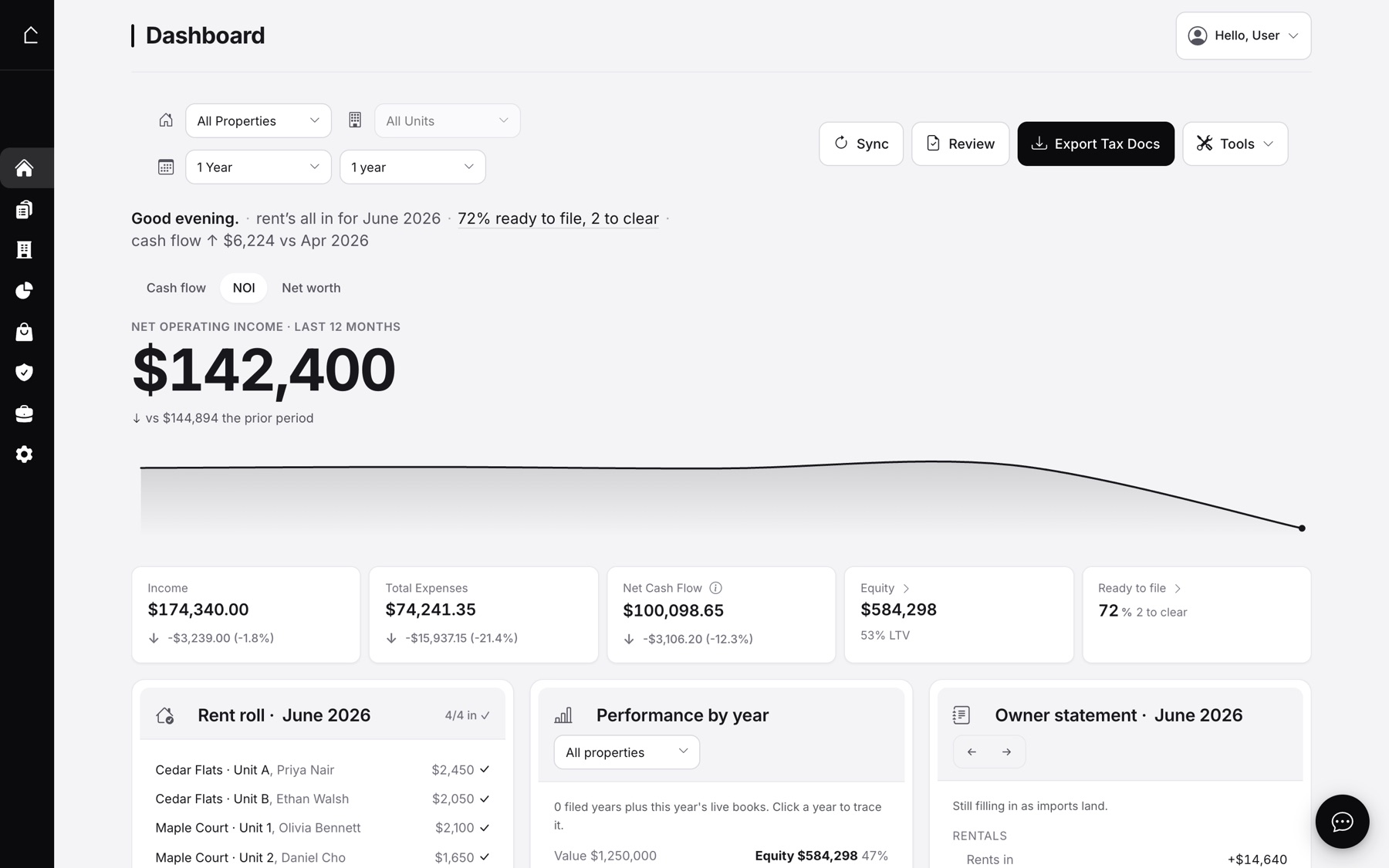
On real rental books the repair-vs-improvement call is where deductions quietly leak: a $9,600 window job expensed in full invites a question, and a $450 repair buried in an account that maps to Other never reaches line 14 at all. Oberlin24 reads every cost, flags the ones where the repair-or-capitalize treatment looks off with the BAR reasoning attached, and keeps the note that survives review. The tax package it exports lands each item on the right line, line 14 for repairs, line 18 for what gets capitalized.
Prefer to do it by hand? Keep the one-line BAR note per item and your safe-harbor election statements with the year's return; that is what makes a line 14 deduction defensible three years later.
This is one piece of the monthly routine. I wrote up the whole thing, the four monthly moves and the year-end return, in how I do the bookkeeping for both rentals in about a minute a month.