Free download
Security deposit itemization form
A free security deposit itemization form: the deduction statement most states require after move-out, with one line per deduction, the evidence backing it, and a refund-due total that calculates itself. It doubles as your tax record for the amount you keep. No email, no signup.
- One line per deduction: description, type, amount, and what backs it
- Total withheld and refund due, live formulas
- Tenancy header: unit, tenant, move-out date, deposit held, forwarding address
Educational template, not legal advice. Deposit deadlines, interest rules, and penalty caps are state law, so confirm your state's requirements before you send it.
What a security deposit itemization form is
When a tenant moves out and you keep any part of the deposit, most states require you to send an itemized statement: each deduction, its dollar amount, and the refund for whatever is left, delivered within a state-set deadline that commonly runs 14 to 45 days after move-out. Miss the deadline or send a vague list and many states void your right to withhold anything, and some award the tenant two or three times the deposit in penalties. The form is the difference between a documented deduction and a forfeited one.
What to put on every line
| Field | Why it matters |
|---|---|
| Tenant and forwarding address | The statement and refund have to reach the tenant; the address on the form proves you sent it to the right place |
| Original deposit held | The starting number, matching the lease and the deposit receipt |
| Each deduction, described plainly | "Wall repair, tenant damage, $420" survives a dispute; "cleaning and repairs, $600" does not |
| What backs each charge | An invoice, receipt number, or dated photos. Unsupported charges are the first thing a small-claims judge strikes |
| Total withheld and refund due | The template computes both; a negative refund is the balance the tenant still owes |
| Date sent | The state deadline is measured to this date, so record it on the form itself |
What you can deduct, and what is normal wear
Deposits cover what the tenant owes and the damage the tenant caused: unpaid rent, cleaning the lease makes the tenant responsible for, and damage beyond normal wear, a broken window, a stained carpet, a hole in the wall. Normal wear is what any tenancy leaves behind, faded paint, carpet worn thin by feet, small nail holes, and it is not deductible anywhere. The dividing line is cause: age and ordinary use are yours, negligence and abuse are the tenant's. When a damaged item was already partway through its life, prorate it. A carpet with 2 years left on a 10-year life supports a charge for the 2 years, not a brand-new carpet.
How to fill it out
Build the form from real paper, not estimates: walk the unit against the move-in condition report, get the invoice or a written quote for each fix, and photograph what you are charging for, dated. Enter one line per deduction with the amount from the invoice, and put the document behind it in the "backed by" column. Enter the deposit held (and accrued interest, if your state requires interest) in the header, and the refund due computes itself. Send it with the refund by your state's deadline, keep a copy with the receipts, and file it with the lease.
The tax side: this form is also your books
The deposit was a liability the whole time you held it, not income. The moment you withhold part of it, the amount you keep becomes rental income in that year, reported on Schedule E line 3, and the repairs you paid for are deducted separately on line 14, never netted into one number. That means the itemization form you send the tenant and the entries in your books describe the same event: the total-withheld line is your income entry, and each backed deduction is an expense entry with its receipt already attached. The full treatment, including the last-month's-rent trap and the refund-booked-as-an-expense error, is in our guide to security deposit accounting, and the deposit's resting place while you hold it is a liability line on your balance sheet. When the form is filled out, the security deposit return letter is the cover page it travels back to the tenant with. If the books behind the deposit are the part that needs work, start with the rental bookkeeping walkthrough.
Frequently asked questions
What is a security deposit itemization form?
The written statement a landlord sends a departing tenant listing every deduction taken from the deposit, its dollar amount, and the refund of whatever is left. Most states require it within a set deadline after move-out, commonly 14 to 45 days, and many void your right to withhold anything if it is late or missing. This template covers the tenancy details, the itemized deductions with their backing evidence, and the refund math.
What can a landlord deduct from a security deposit?
Unpaid rent, cleaning the lease makes the tenant responsible for, and damage beyond normal wear: a broken window, a stained carpet, a hole in the wall. Normal wear from ordinary use, faded paint, carpet worn by age, small nail holes, is not deductible. For a damaged item that was already partway through its useful life, charge the remaining life, not the price of a new one.
What counts as normal wear and tear?
The decline any tenancy causes through ordinary use and time: faded or scuffed paint, carpet flattened along walking paths, loose door handles, small nail holes from hanging pictures. The dividing line is cause. Age and everyday use are the landlord's cost of doing business; negligence, accidents, and abuse are the tenant's. Charging deposit money for normal wear is the deduction most often reversed in small claims court.
How long does a landlord have to return a security deposit?
It is state law and commonly 14 to 45 days after move-out, with 30 days a frequent middle. The clock usually starts when the tenancy ends or when the tenant returns the keys, and the itemized statement has to travel with (or before) the partial refund. Miss the deadline in many states and you forfeit the right to withhold, and some states add penalties of two or three times the deposit. Check your state's statute and record the date sent on the form.
What evidence should back each deduction?
An invoice, a receipt, a written quote, or dated photos, ideally photos paired with the move-in condition report so the change is visible. Unsupported round-number charges are the first thing a judge strikes. The template has a backed-by column on every line so each deduction names its document, which is also exactly the receipt trail your bookkeeping needs for the same charges.
Is a withheld security deposit taxable income?
Yes. The amount you keep becomes rental income in the year you keep it, reported on Schedule E line 3, per IRS Publication 527. The repairs you paid for out of it are deducted separately on line 14 if they qualify as repairs; you report both lines, never the netted difference. A deposit you fully refund is never income, it was a liability the whole time you held it.
How I do this in Oberlin24
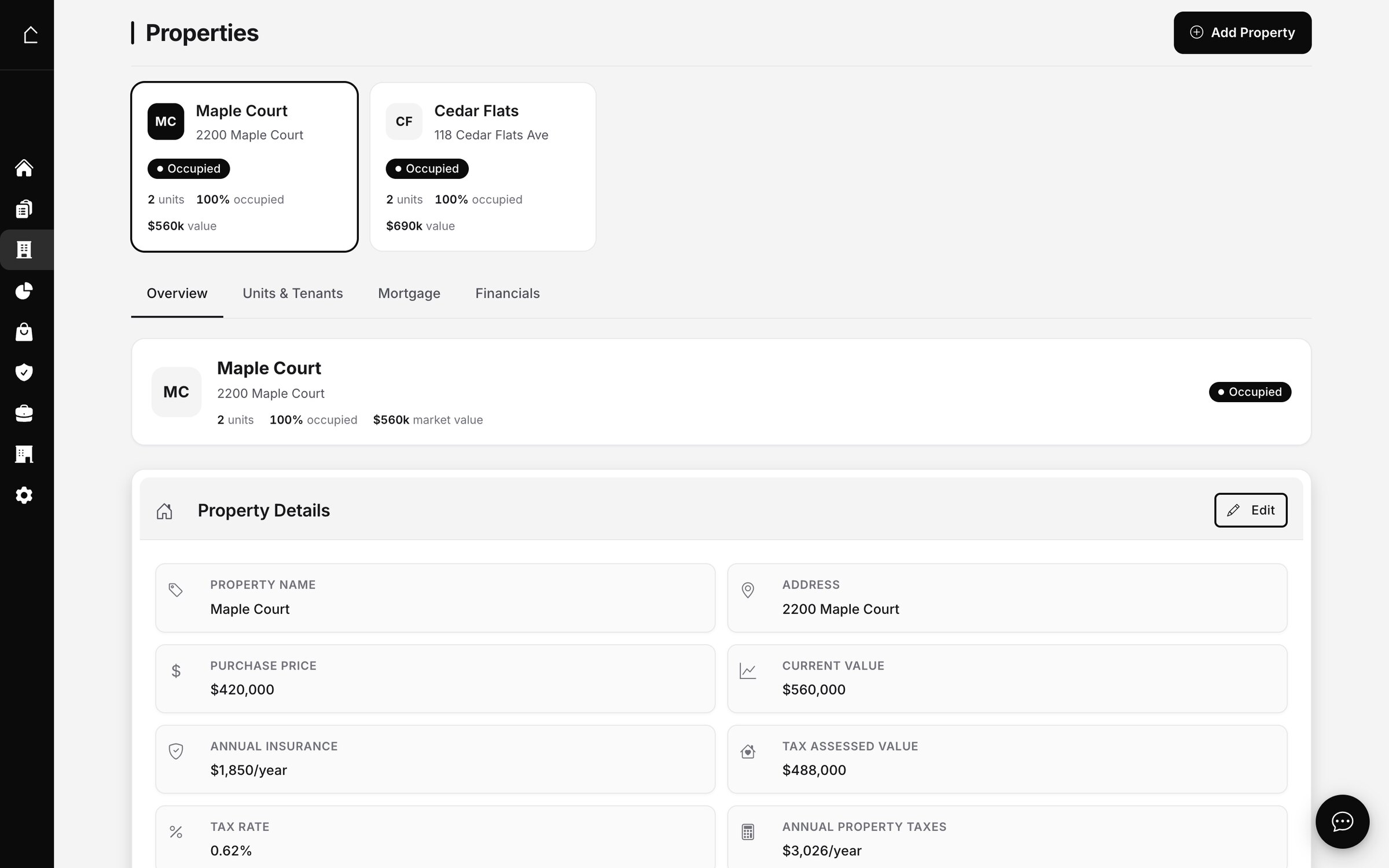
I run two rentals of my own. By hand, a move-out is this form: the deposit from the lease header, the deductions from real invoices, the refund out. In Oberlin24 every deposit lives as a liability from the day it lands, so at move-out the held amount is already sitting there next to the lease, the withheld part books to income in the right year, and a refund that goes out still booked as a deductible expense gets flagged, because a returned deposit is not a deduction. Here is where the deposits sit, next to each lease:
Prefer to build your own? The shape is simple: a liability account per deposit, a form like this one at move-out, and income recognized only for the part you keep. It is 2026, you can wire that together yourself.
This is one piece of the monthly routine. I wrote up the whole thing, the four monthly moves and the year-end return, in how I do the bookkeeping for both rentals in about a minute a month.