Free template + generator
Security deposit return letter
The cover letter that goes back to your tenant with the deposit refund and the itemized deduction statement. Download the fill-in-the-blank letter, or type the details below and the generator writes it for you, refund math included. No email, no signup.
- Money summary block: deposit held, interest, deductions, refund due
- One ready paragraph per outcome: full refund, partial, or balance owed
- Enclosure and delivery lines, so the deadline proof is on the letter
Or generate the letter here
Everything runs in your browser. Nothing you type is stored or sent anywhere.
Educational template, not legal advice. Return deadlines, interest rules, and penalties are state law, and a few states prescribe specific wording; confirm your state's statute before you send it.
What a security deposit return letter is
When a tenancy ends, most states give the landlord a deadline, commonly 14 to 45 days, to return the deposit or say in writing why any of it was kept. The return letter is that writing: the deposit you held, the deductions you took, the refund that goes back, and where the backing documents are. It travels with two companions, the refund check and the itemized statement of deductions. The letter is the summary and the proof of sending; the itemization form is the line-by-line detail behind it.
What the letter must cover
| Element | Why it matters |
|---|---|
| Tenant's forwarding address | The refund and statement must reach the tenant. Many states let you use the last known address if none was given, but say so in the letter |
| The tenancy identified | Property, unit, move-in and move-out dates. The move-out date starts the statutory clock |
| The money in one block | Deposit held, interest where required, total deductions, refund due. One arithmetic line a judge can check in five seconds |
| The outcome paragraph | Full refund, partial refund, or balance owed. Different wording for each; the generator above picks from the math |
| Reference to the itemized statement | The letter summarizes; the enclosed statement carries each deduction with the invoice, receipt, or photos behind it |
| Date and delivery method | The deadline is measured to when you sent it. Certified mail buys you the receipt that proves it |
Three outcomes, three paragraphs
Full refund. The easy one: no deductions, the whole deposit goes back. Send the letter anyway. It closes the tenancy file, proves the date, and stops a later claim that you never accounted for the deposit.
Partial refund. The most common and the most litigated. The letter states the deduction total and points at the itemized statement; every charge on that statement names its evidence. Round numbers with no document behind them are what small-claims judges strike first.
Balance owed. When documented charges exceed the deposit, the letter shows the deposit fully applied and asks for the remainder by a date. Whether you pursue the balance is a business decision; the letter preserves the claim either way.
One line that does not belong in any of the three: the last month's rent. A tenant who leaves on the 11th owes eleven days of rent, and that is ordinary rent on its own line, not a deduction from the deposit. Netting the two is what turns a clean letter into an argument, because the tenant reads a smaller refund and cannot see why. Work the partial month out separately with the prorated rent calculator and bill it as rent.
Deadlines and delivery
Every state sets its own clock, commonly 14, 21, 30, or 45 days from move-out or key return. Miss it and many states void your right to withhold anything; some add penalties of two or three times the deposit. So the letter's date line is not decoration, it is the evidence the deadline was met. Send by certified mail where the amount at stake justifies the few dollars, keep the receipt stapled to your copy, and if the lease allows email delivery, keep the sent message. The deadline applies even when the tenant left owing you money.
The tax side: the letter matches your books
A refunded deposit is not income and never was; it sat in your books as a liability from the day it landed, visible on your balance sheet. The moment you withhold part of it, that part becomes rental income for the year, on Schedule E line 3, and the repairs you paid for out of it deduct separately on line 14. Both lines, never the netted difference. The full treatment, including the last-month's-rent trap, is in the security deposit accounting guide; the bigger picture of keeping the books that make this a five-minute job is the rental bookkeeping walkthrough.
Frequently asked questions
What is a security deposit return letter?
The cover letter a landlord sends a departing tenant with the deposit refund and the itemized statement of any deductions. It identifies the tenancy, shows the money in one block (deposit held, interest where required, deductions, refund due), and records the date and delivery method, which is the evidence the state deadline was met. The itemized statement carries the line-by-line detail; the letter is the summary on top.
Do I have to send a letter if I'm refunding the full deposit?
A few states require written notice only when you withhold, but send it anyway. The letter closes the tenancy file, fixes the date the refund went out, and prevents a later claim that the deposit was never accounted for. The full-refund version is three sentences and takes two minutes with the template.
What do I say when deductions are more than the deposit?
State the documented charges, show the deposit and any interest fully applied against them, and ask for the remaining balance by a date. Keep the tone factual and point every charge at its invoice, receipt, or dated photos on the enclosed statement. Whether you actually pursue the balance in small claims is a separate business decision; the letter preserves the claim either way.
How long do I have to send it?
It is state law, commonly 14 to 45 days from move-out or key return, with 30 days a frequent middle. Miss the deadline and many states void your right to withhold anything, and some add penalties of two or three times the deposit. The clock is measured to when you sent the letter and refund, so record the sent date on the letter itself and keep proof of mailing.
Should I send it by certified mail?
When you are withholding anything meaningful, yes. Certified mail gives you a dated receipt that proves the deadline was met and the statement actually went to the forwarding address. For a full refund, first-class mail is usually fine, and email works where the lease explicitly allows electronic notices. Whatever the method, note it on the letter and keep the proof with your copy.
Does the withheld part of the deposit count as income?
Yes. The amount you keep becomes rental income in the year you keep it, reported on Schedule E line 3 per IRS Publication 527, and the repairs you paid for out of it are deducted separately on line 14. You report both lines, never the netted difference. A deposit you refund in full was never income; it was a liability the entire time you held it.
How I do this in Oberlin24
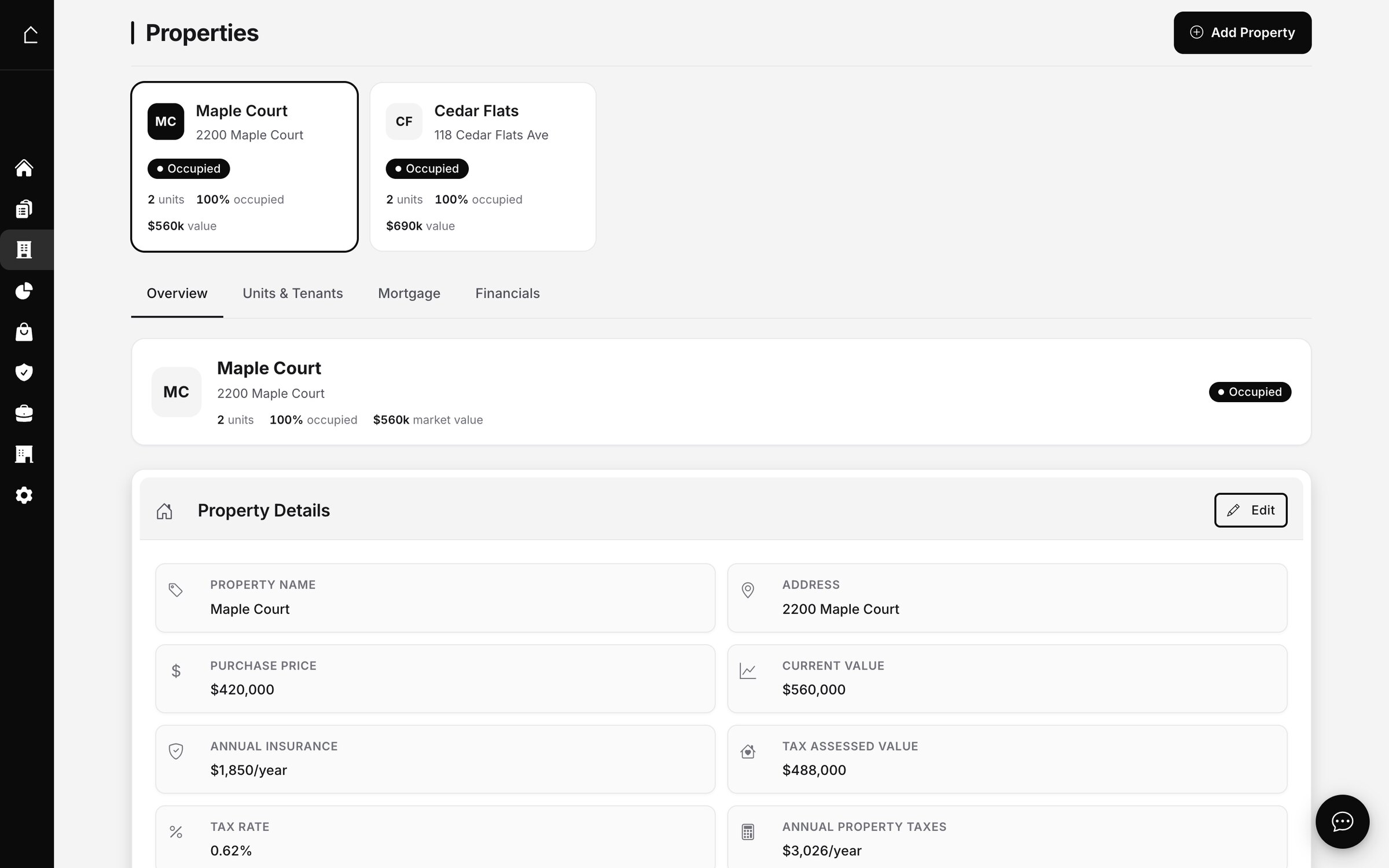
I run two rentals of my own. A move-out used to mean reconstructing the deposit trail: what I held, what the lease said, which repairs came out of it. In Oberlin24 the deposit sits as a liability next to its lease the whole tenancy, so at move-out the held amount, the withheld income entry, and the repair deductions are already in the books, and this letter is just reading them back. A refund that accidentally stays booked as a deductible expense gets flagged, because a returned deposit is not a deduction. Here is where the deposits sit, next to each lease:
Prefer to build your own? The shape is simple: a liability account per deposit, the itemized statement at move-out, this letter on top, and income recognized only for the part you keep. It is 2026, you can wire that together yourself.
This is one piece of the monthly routine. I wrote up the whole thing, the four monthly moves and the year-end return, in how I do the bookkeeping for both rentals in about a minute a month.